
Before You Light the Fire Pit
The Gas Fire Pit Safety Questions I Hear All the Time
There is something dangerously charming about a gas fire pit.
You press a button, turn a key, or flip a switch, and suddenly the patio has ambiance. The evening feels softer. The chairs look more inviting. Someone says, “We should do this more often,” while pretending they were not inside complaining about the weather fifteen minutes ago.
I love a good outdoor gas fire pit. They are clean, convenient, beautiful, and much easier to live with than a wood-burning fire pit that smokes out your guests like it has a personal vendetta.
But here is my fireplace-girl reminder: a gas fire pit is still a live-flame gas appliance.
It may look decorative, but it still needs:
Proper clearance
Ventilation
Safe installation
Routine maintenance
Adult supervision while operating
So let’s go through the gas fire pit safety questions I hear most often from homeowners — without the panic, without the stiff technical lecture, and without pretending fire behaves politely just because it is outside.
Why Gas Fire Pit Safety Matters
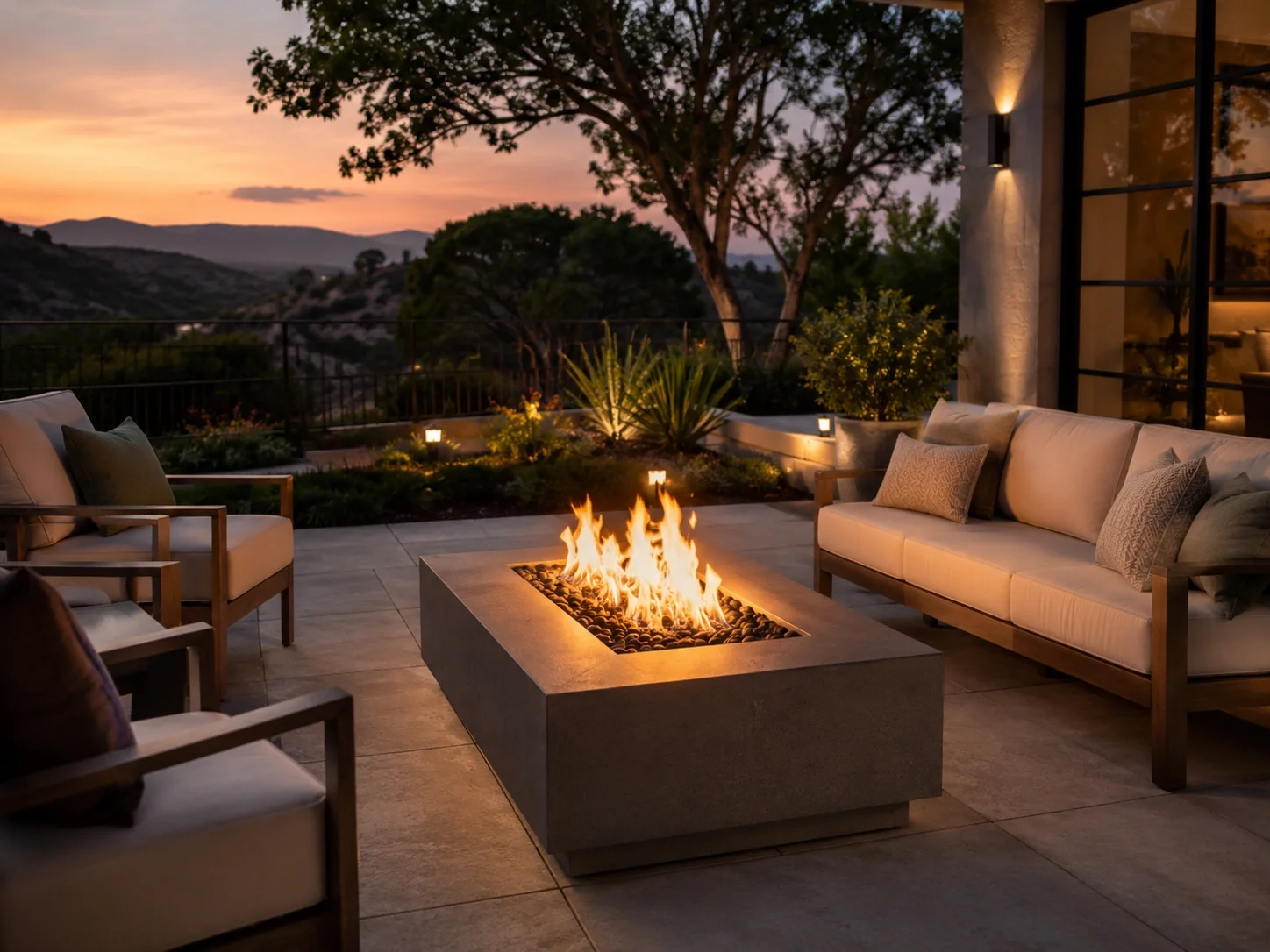
Modern gas fire pit glowing on patio at dusk
Gas fire pits are usually very safe when they are installed correctly and used properly.
The problems usually start when people treat them like patio furniture instead of appliances. A gas fire pit may be beautiful, but it still uses fuel, flame, heat, and sometimes electrical ignition components.
A safe gas fire pit setup depends on a few important things:
Proper installation
Correct gas pressure
Proper gas line sizing
Safe clearance from combustible materials
Good ventilation inside the enclosure
Proper drainage
Correct fire media placement
Easy access to the gas shutoff
Routine maintenance
Supervision while the fire pit is burning
That may sound like a lot, but the basic idea is simple:
The fire pit needs to breathe, drain, burn cleanly, and stay away from anything that can melt, scorch, or catch fire.
Honestly, same.
Can I Put a Gas Fire Pit Under a Covered Patio?
Sometimes, yes — but this is not a “looks fine from here” situation.
A covered patio can be a beautiful place for a gas fire pit, but only if the setup allows for proper overhead clearance, airflow, and heat movement.
Even outdoors, heat can build up under a roof, pergola, pavilion, or covered structure.
Before installing a gas fire pit under a covered patio, check:
The fire pit installation manual
Required overhead clearance
Side clearance from walls, posts, curtains, and furniture
Ceiling material
BTU rating
Ventilation around the covered area
Local building and gas codes
A covered patio should never be assumed safe just because it is outside.
My take: if there is anything overhead, check the manual and local code before lighting anything. Fire is lovely. Guessing is not.
How Far Should a Gas Fire Pit Be from the House?
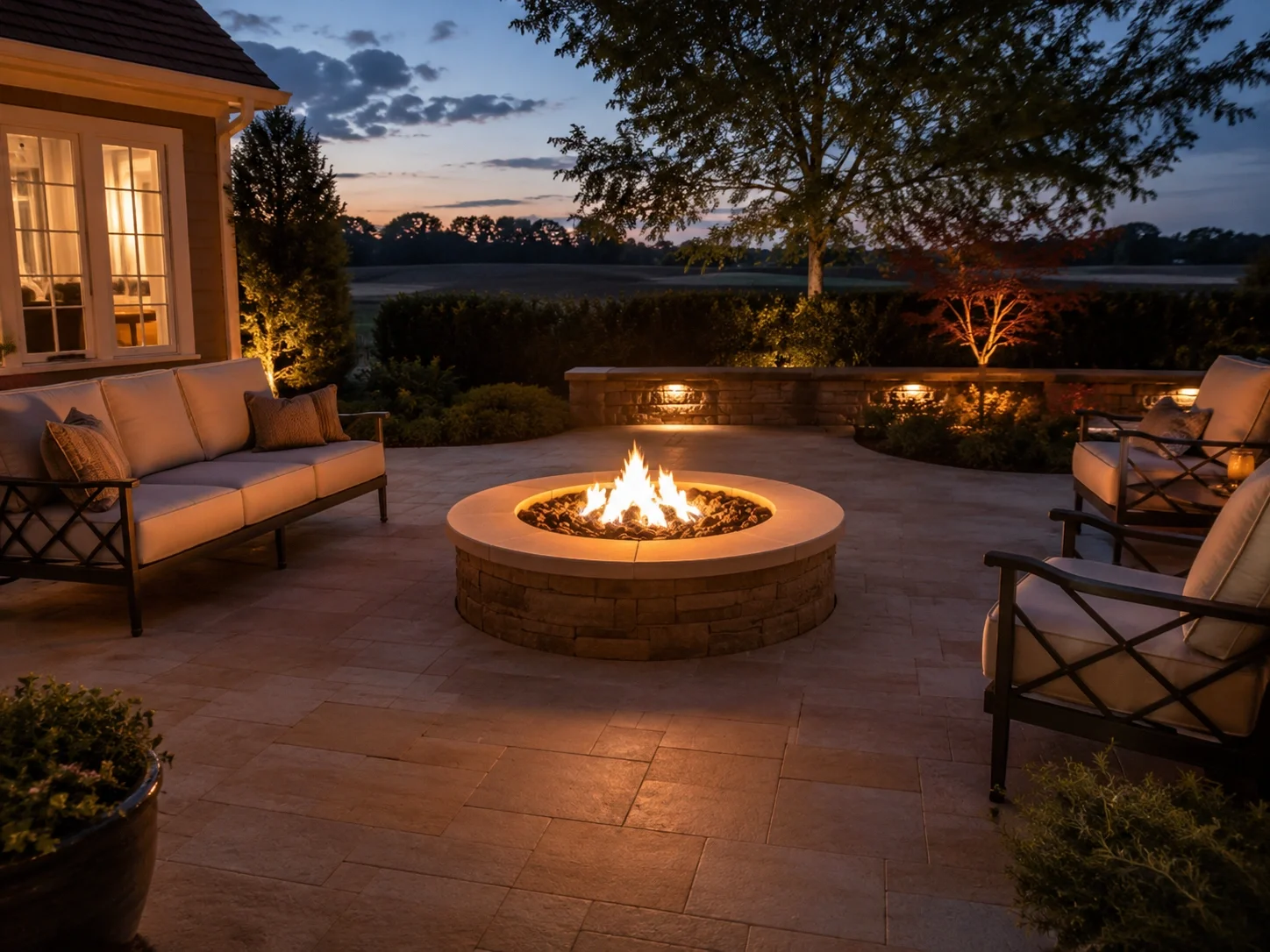
Modern gas fire pit glowing on patio at dusk
Clearance depends on the exact fire pit, burner system, fuel type, BTU rating, and local code.
That means there is no magic distance that works for every setup.
But the goal is always the same: keep heat away from anything combustible.
Combustible materials can include:
House siding
Wood framing
Deck railings
Outdoor furniture
Cushions and pillows
Pergolas
Curtains or privacy screens
Dry leaves
Mulch
Planters
Trees and shrubs
Patio umbrellas
I have seen beautiful patio layouts where the chairs were placed way too close to the flame because it looked cozy in the design.
The patio looked great.
The cushions were one warm evening away from writing a strongly worded complaint.
Always follow the clearance requirements for your specific fire pit. A gas fire pit is not regular patio furniture. It may sit on the patio, but it plays by appliance rules.
Can a Gas Fire Pit Explode?
A properly installed and maintained gas fire pit should operate safely.
The danger comes when gas leaks, collects inside an enclosure, or ignites after building up where it should not.
Possible causes of dangerous gas buildup include:
Poor ventilation
Gas leaks
Improper gas connections
Incorrect enclosure design
Blocked vents
Delayed ignition
Damaged valves or components
Improperly placed fire media
Poor drainage
This is why ventilation is so important. If gas ever leaks inside the fire pit base, it needs a safe way to escape.
Gas does not need drama.
It needs airflow.
If your fire pit gives you a hard “whoosh” when lighting, smells like gas, struggles to ignite, or has strange flame behavior, shut it off and call a licensed gas professional.
Do not keep trying to light it.
Do not “see what happens.”
That is how eyebrows become temporary.
Why Does My Gas Fire Pit Need Ventilation Openings?
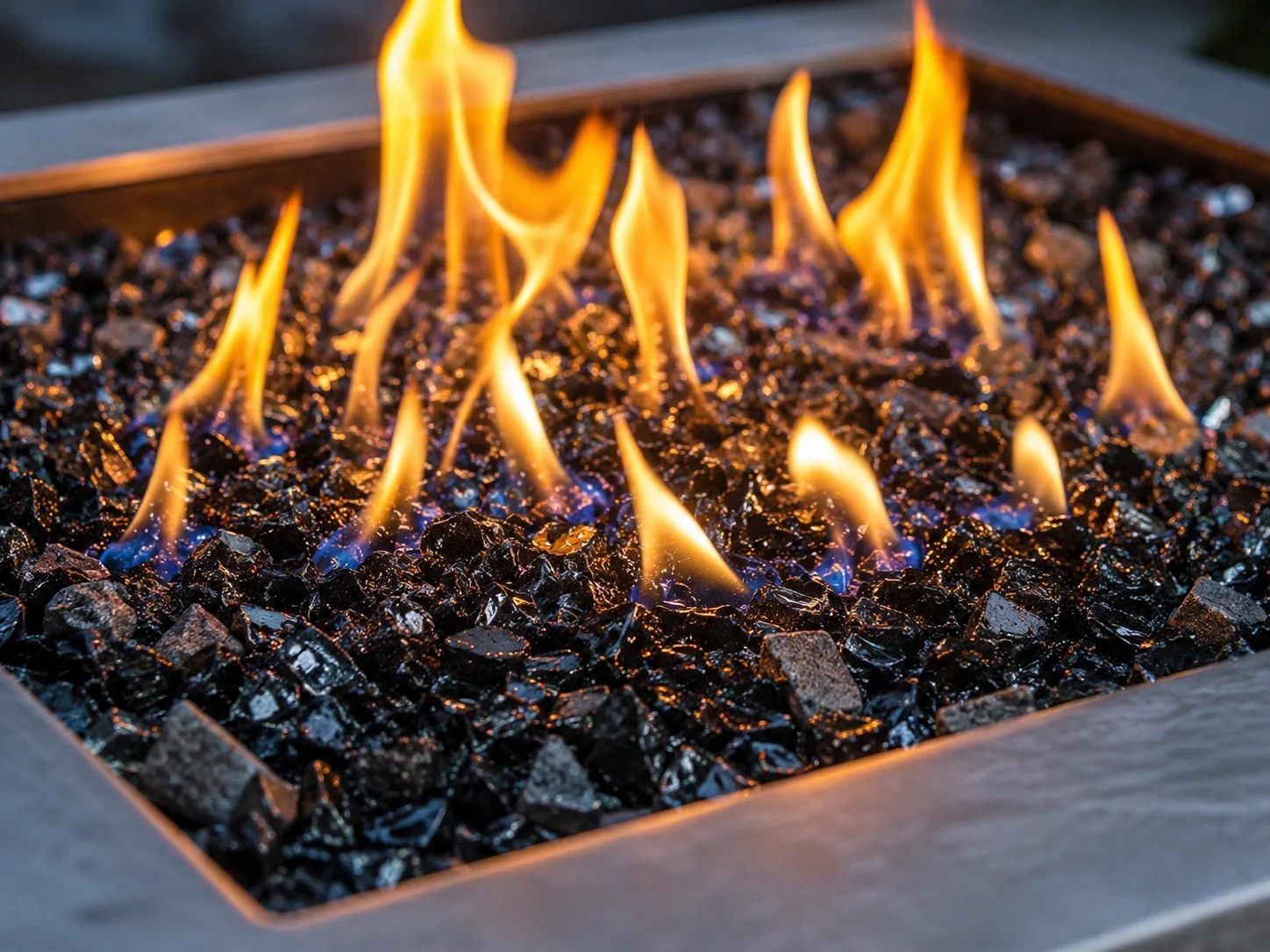
Modern gas fire pit glowing on patio at dusk
Ventilation openings are not decorative little design details.
They are safety features.
Vent openings help:
Prevent gas from collecting inside the enclosure
Move air through the fire pit base
Reduce heat buildup around internal parts
Limit moisture problems
Protect valves and ignition components
Support better burner performance
This matters even more with propane systems because propane is heavier than air and can settle low inside an enclosure.
Natural gas behaves differently, but it still needs proper ventilation based on the appliance instructions.
The short version?
Do not block the vents.
Not with furniture.
Not with plants.
Not with decorative panels.
Not with a “temporary” patio pillow that becomes permanent because everyone forgot about it.
Ventilation is not optional. It is part of the safety system.
Can I Leave My Gas Fire Pit Burning Unattended?
No.
A gas fire pit should never be left burning unattended.
Even though gas fire pits do not throw sparks like wood fires, they still have:
Open flame
Hot surfaces
Hot fire media
Fuel
Heat
Nearby patio items that can move, blow around, or get bumped
Things can change quickly outdoors.
Wind picks up. A cushion slides too close. Leaves blow into the area. A child runs past. A dog decides the patio is suddenly a racetrack.
Nova, my husky, has never read a fire pit manual and frankly would consider it rude if I asked. 🐾
Before leaving the area, always:
Turn off the fire pit
Make sure the flame is completely out
Confirm the shutoff is closed
Keep kids and pets away while surfaces cool
Wait until the fire pit is fully cool before covering it
Convenient ignition does not replace supervision.
A remote control is nice.
A responsible adult is better.
How Do I Know If My Gas Fire Pit Has a Leak?
If you smell gas or suspect a leak, shut off the gas supply immediately if it is safe to do so and call your gas supplier or a licensed gas professional.
Do not light the fire pit.
Do not keep trying to ignite it.
Do not poke around pretending you suddenly became a gas technician because you watched two videos and felt brave.
Possible signs of a gas leak include:
Rotten egg or sulfur-like smell
Hissing near fittings or valves
Unusual flame behavior
Difficulty lighting
Flame sputtering
Gas smell before or after use
Dead vegetation near a gas line
Gas leaks are not something to troubleshoot casually.
Homeowners can look for obvious problems like blocked vents, debris, or damaged parts, but actual gas connections and pressure issues belong to a qualified professional.
That is not me being dramatic.
That is me liking houses intact.
Can I Put a Gas Fire Pit on a Deck?
Sometimes, yes — but only if the fire pit is approved for that type of installation and the deck surface is properly protected.
Deck installations need extra care because decks can be made from:
Wood
Composite material
Vinyl
PVC
Concrete
Stone
Tile
Each material handles heat differently.
Before installing a gas fire pit on a deck, check:
Whether the fire pit is approved for deck use
Required clearance from railings and furniture
Whether a heat barrier or installation kit is needed
How hot the base can get
Gas line routing
Ventilation requirements
Drainage requirements
Local code rules
Do not assume a fire pit is deck-safe just because it has legs or looks contained.
Outdoor-friendly and deck-approved are not always the same thing.
And be careful with rugs under fire pits. Outdoor rugs can be cute, but cute is not the same as heat-rated.
A patio rug near fire can go from “cozy design layer” to “why does it smell weird?” very quickly.
Are Gas Fire Pits Safe Around Kids and Pets?
Gas fire pits can be safer than wood-burning fire pits in some ways because there are no popping embers, rolling logs, or heavy smoke.
But they are still hot.
Very hot.
The biggest risks for kids and pets are:
Open flame
Hot fire glass
Hot lava rock
Hot metal edges
Glass wind guards
Trip hazards
Curious hands, paws, tails, and noses
Fire media and metal surfaces can stay hot long after the flame is turned off.
That is the part many people forget.
Once the flame disappears, the fire pit may look harmless — but the surface can still be hot enough to burn.
Set simple rules:
No touching the fire pit
No reaching over the flame
No running around the fire feature
No throwing anything into the fire
No moving chairs too close
No blankets near the flame
If you entertain often, arrange seating with a little breathing room around the fire pit. Comfortable is good. Knees-touching-the-flame-zone is not.
How Much Maintenance Does a Gas Fire Pit Need?
Gas fire pits need less maintenance than wood-burning fire pits, but they are not maintenance-free.
You do not have ash cleanup, smoke residue, or half-burned logs.
Bless that.
But outdoor gas fire pits still deal with moisture, bugs, pollen, dirt, leaves, wind, and seasonal weather.
Routine maintenance should include checking:
Burner ports
Fire media placement
Vent openings
Drainage openings
Gas connections
Ignition performance
Control valves
Battery packs, if used
Rust or corrosion
Water inside the enclosure
Leaves and debris
Insect nests or spider webs
Spiders love tiny gas openings.
I wish I were kidding.
A small web or blockage can affect flame quality and burner performance. Outdoor appliances attract all kinds of little freeloaders.
At minimum, inspect your fire pit before heavy-use season. For permanent gas fire pits, an annual professional inspection is a smart idea.
Should I Cover My Gas Fire Pit?
Yes, in most cases — but only after the fire pit is completely cool.
A proper cover helps protect your fire pit from:
Rain
Leaves
Dirt
Pollen
Snow
Debris
UV exposure
Critters looking for luxury housing
Never cover a hot fire pit.
Trapped heat can damage the cover, the fire pit, or both.
Also, remember that a cover does not replace drainage. If water gets inside the enclosure, it still needs a way out.
A cover helps protect the fire pit.
Drainage helps keep it from sitting in its own little swamp.
Both matter.
Can I Cook Over a Gas Fire Pit?
Usually, no — unless the fire pit is specifically approved for cooking.
Most decorative gas fire pits are designed for ambiance, not dinner.
I know the flame is right there. I know marshmallows start whispering. I understand the temptation.
But decorative gas fire pits often use:
Fire glass
Lava rock
Ceramic logs
Stainless burners
Decorative media
Components not designed for grease or food drips
Cooking over the wrong fire pit can cause:
Clogged burner ports
Grease buildup
Bad odors
Damaged fire media
Uneven flame
Unsafe flare-ups
A cleaning project nobody asked for
Check the manual before roasting anything.
If it says decorative use only, believe it.
Should I Build My Own Gas Fire Pit?
You can build a custom fire pit enclosure, but the gas system itself is not the place to wing it.
A lot of homeowners are handy.
I respect handy.
But gas fire pits require proper:
Gas pipe sizing
Gas pressure
Burner compatibility
Ventilation
Drainage
Clearances
Shutoff access
Code compliance
Ignition setup
Common DIY mistakes include:
Using the wrong gas line size
Not providing enough ventilation
Blocking drainage
Using non-approved parts
Installing too close to combustibles
Burying or hiding shutoff access
Placing fire media incorrectly
Mixing parts that were not designed to work together
Gas is not a “close enough” category.
If you want a custom look, work with a qualified professional for the gas and appliance side. You can still pick the stone, shape, style, and overall design — but the fuel system needs to be done correctly.
Fire pits should be cozy.
Not spicy in the legal-liability sense.
My Quick Safety Check Before Lighting a Gas Fire Pit
Before lighting your outdoor gas fire pit, check:
The area is clear of combustibles
Furniture is far enough away
Vent openings are not blocked
There is no gas smell
The burner area is dry and clean
Fire media is properly placed
Leaves and debris are removed
Kids and pets are supervised
Wind conditions are safe
The shutoff is easy to access
The cover has been removed
Nothing looks damaged or unusual
After lighting, watch the flame for a moment.
It should look stable and normal for your fire pit.
If something seems off, shut it down and have it checked.
My Final Fireplace-Girl Take
A gas fire pit can be one of the best parts of an outdoor living space.
It gives you warmth, glow, atmosphere, and that magical patio feeling where everyone suddenly wants to stay outside a little longer.
But it still deserves respect.
A safe gas fire pit should be:
Installed correctly
Properly ventilated
Kept clear of combustibles
Maintained regularly
Supervised while burning
Checked if anything smells, sounds, or looks wrong
Enjoy the flame.
Enjoy the cozy evenings.
Enjoy the patio looking like it belongs in a magazine for once.
Just remember: the best fire pit is not the one with the biggest flame.
It is the one you can enjoy with confidence, season after season, without wondering if the furniture is sitting a little too close for comfort.
